
Categories
Buying, West Metro LivingPublished October 28, 2026
Buying a Waterfront Home You'll Live In Every Day: What to Check Before the View Wins

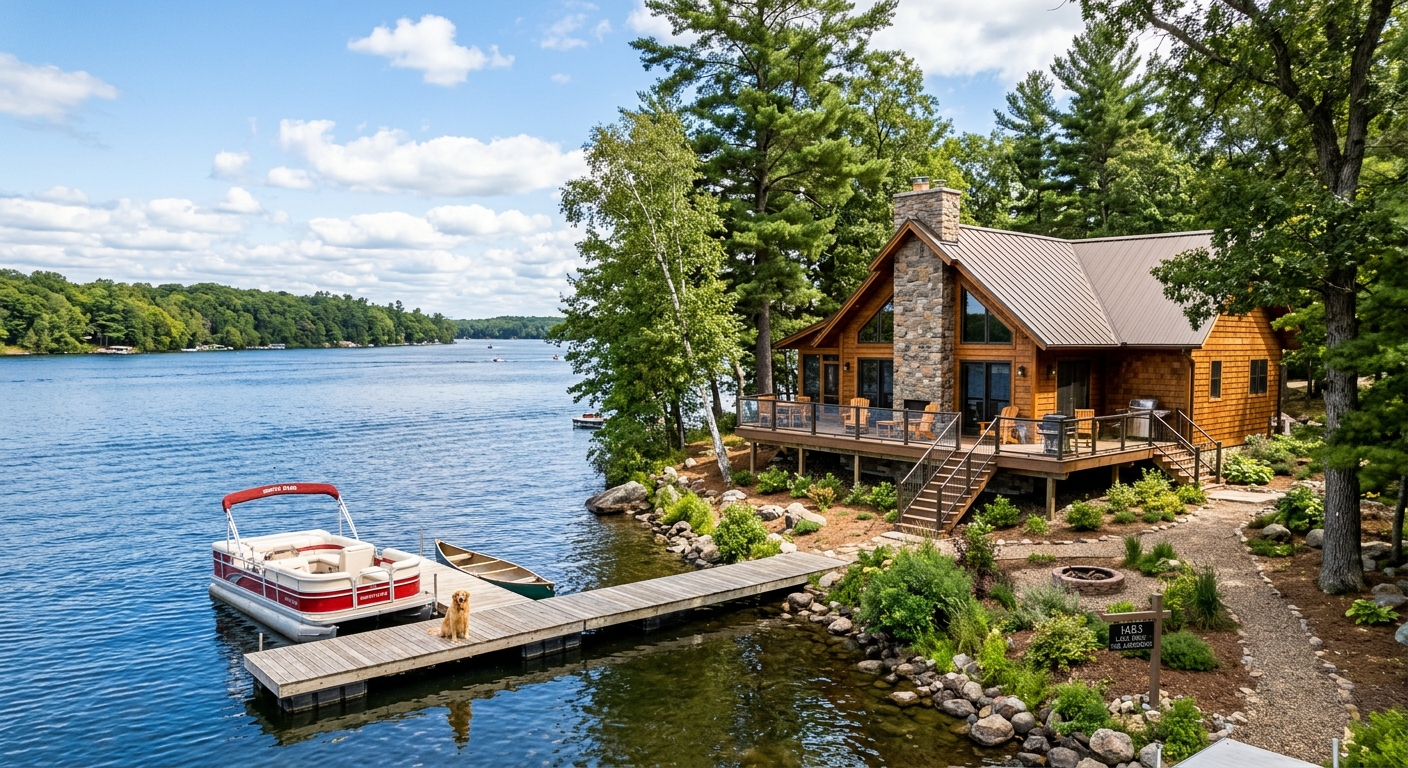
Most waterfront buyers decide how they feel about a house in the first five minutes. They walk through the front door, see the water through the back windows, and the rest of the showing is a formality.
The view is the easy part. You can see it. What you're actually paying for is harder to see: what you're allowed to build later, where your dock can go, what's in the water, and what happens to the shoreline in a wet spring.
I read disclosures and inspection reports line by line with my buyers. On a lake home there's more to read, and some of it isn't in the listing at all.
Here's what I'd check before writing an offer on a lake home west of Minneapolis, whether that's Lake Pulaski in Buffalo, Lake Minnetonka, or a smaller lake in between.
1. Lakeshore, lake access, or lake view?
Listings use these words loosely, and the difference is the whole price.
- Lakeshore means your lot touches the water. You're the riparian owner, which is the legal term for the person whose land meets the lake.
- Lake access usually means you can reach the water through an easement, a shared outlot, or an association. Your rights depend on what that easement or association document actually says. Sometimes the association holds the lakeshore rights, not the individual homes.
- Lake view means you can see it. That's it.
Before you fall for a "lake access" home, get the easement or association documents and read them. Who can put a dock in? How many boats? Is a slip guaranteed, assigned, or first come?
2. What you can build later
This is the one buyers miss most often.
Land within 1,000 feet of a lake falls under Minnesota's shoreland rules. Those rules set minimum distances a house, garage, or addition has to sit back from the lake's ordinary high water level (the line where the water has normally reached long enough to mark the land). The minimum depends on the lake's classification and whether the property is on city sewer. On the most common lake class, it's 50 feet with sewer and 75 feet without. On more protected lakes, it can be 150 feet.
Those are state minimums. Your city or county runs the actual rules and can be stricter, so the local ordinance is the one that counts.
Why this matters to you as a buyer: plenty of older lake homes sit closer to the water than today's rules allow. They can usually stay. But if you're planning to add a bedroom, a bigger garage, or a porch, you may need a variance, and a variance isn't guaranteed. There are often limits on hard surfaces like driveways and patios, and on clearing trees and brush near the water.
Before you write an offer on a home you plan to change, call the city or county zoning office with the address and ask:
- What's this lake's shoreland classification?
- What's the required setback for this lot?
- Does the current house meet it?
- Would my plans need a variance?
3. City sewer or septic?
Some lake homes are on city sewer. Many aren't, especially on lakes that sit outside city limits. Don't assume.
Sewer or septic changes two things. It affects the setback rules above, and it changes what you're inspecting. If the home has a septic system, the seller has to disclose it in writing before you sign a purchase agreement. That disclosure is what the seller knows, which isn't the same as a licensed inspector's evaluation. Find out whether the city or county requires a compliance inspection at sale. If it doesn't, consider paying for one yourself.
4. The dock: what actually comes with it
On most Minnesota lakes, the DNR has dock standards and your city may add its own. On Lake Minnetonka, docks are regulated by the Lake Minnetonka Conservation District (LMCD). Your dock, boats, and lifts have to stay inside an authorized dock use area. That area is set by how far you are from your side property lines, extended out into the lake, and by how far you can go out.
Two things on Minnetonka catch people off guard:
- Water depth varies a lot, even within the same bay. A dock that works in a high-water year can sit on sand in a low one.
- Variances stick. A past variance on the property, or on a neighbor's, can permanently change your dock area or how many boats you can keep.
On any lake, ask:
- Do the dock and lift sell with the house? Get it in writing.
- Who installs and removes them, and what does it cost each year?
- How deep is the water at the end of the dock in a dry summer?
5. What's in the water
The Minnesota DNR keeps an Infested Waters List of lakes with aquatic invasive species. Look up the lake before you write an offer. Lake Pulaski was added after the DNR confirmed zebra mussels there in 2022. Lake Minnetonka has had them since 2010.
That isn't a reason to walk away. Both lakes are still lakes people love to live on. It is something to know going in. Zebra mussels can cut bare feet, damage boat motors, and clog water intake lines. If you plan to swim off the dock every morning, it changes what you'll want on your feet. If the home uses lake water for irrigation, ask how the intake is maintained.
The DNR's LakeFinder tool also has depth maps, fish survey data, and water clarity information for most lakes. It's free. Use it.
6. Water levels and the shoreline
Lakes go up and down. The question is what that does to this specific house.
- Look at the lowest level. Ask about water in the basement or walkout during high-water years. Look for signs of past moisture.
- Walk the shoreline. Look for erosion, slumping, or failing riprap (the rock along the shore). Shoreline repair can need permits, and it's rarely cheap.
- Call your insurance agent early. Ask whether the property sits in a flood zone and what that does to your coverage and cost, before you're under contract.
7. Add to your inspection
A standard home inspection stops at the house. On a lake home, think about adding:
- A sewer line scope, or a septic compliance inspection
- The dock, lift, and any shoreline structures
- Drainage and grading on the slope toward the water
- A well water test, if the home has a private well
Your lake home checklist
- Read any easement or association documents before you offer
- Call zoning about setbacks if you plan to change anything
- Confirm city sewer or septic
- Find out exactly what comes with the dock and lift
- Look up the lake on the DNR Infested Waters List and LakeFinder
- Ask about high-water history and walk the shoreline
- Talk to your insurance agent before you're under contract
If you're watching lake listings and aren't sure what you'd be getting into
That's the right instinct. Send me the address of a Twin Cities lake home you're watching, and I'll tell you what I'd want answered before you write an offer. Call or text me at 612-382-1304.
FEATURED PROPERTY SEARCHES
Minnesota Condos and Lofts | Minnesota Golf Course Homes for Sale | Minnesota Historic Homes and Real Estate | Minnesota 1+ Acre Homes for Sale | Minnesota Lakefront Homes for Sale | Minnesota Lake and Acreage (5 acres or more) | Minnesota Newest Listings | Minnesota Open Houses | Minneapolis Condos and Townhouses | Minneapolis Lakefront Properties | Minneapolis Land and Lot Sales | Minneapolis Luxury Homes | Minneapolis Multi-Family Homes for Sale | Minneapolis New Construction | Minneapolis Open Houses | Minnesota Homes Price Just Reduced |

Erica Carlson
REALTOR | Erica & Scott Carlson | Minneapolis West Metro Realtors | BRIX Real Estate
or another way